An AC joint separation is a common shoulder injury, especially among athletes and active individuals. It occurs when the ligaments that stabilize the acromioclavicular (AC) joint are damaged or torn, often due to a fall or direct impact to the shoulder. While mild cases can heal with conservative care, more severe separations often require surgery to restore stability and function.
At Steven Struhl, MD – AC Joint Separation, with locations in NYC and Westchester, we emphasize one critical factor in successful outcomes: Continuous Loop Double Endobutton Reconstruction.
Understanding the Complexity of AC Joint Repair
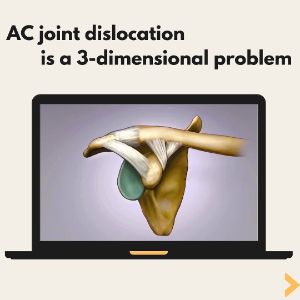
The AC joint plays an essential role in shoulder movement and stability. When the supporting ligaments are disrupted, the collarbone can shift out of place, leading to pain, deformity, and limited mobility.
Surgical repair aims to:
- Reconstruct or stabilize the ligaments
- Restore proper alignment of the joint
- Allow the shoulder to function normally again
However, this is not a simple procedure. The joint is small, the anatomy is delicate, and the forces placed on the shoulder are significant, making precision essential.
Challenges with Traditional Techniques
Historically, AC joint separation surgeries were associated with a number of complications. One of the most common issues was fixation loss, where the repaired joint would gradually lose its corrected position over time.
Other challenges included:
- Hardware failure or breakage
- Knot slippage in suture-based repairs
- Incomplete stabilization
- Need for revision surgery
Studies have shown that older techniques had failure rates ranging from 15% to 30%, highlighting the need for improved surgical methods.
The Importance of Advanced Surgical Technique
Modern approaches to AC joint repair focus on stronger, more reliable fixation and long-term stability. The goal is not just to fix the joint initially, but to ensure that the repair holds over time as the body heals.
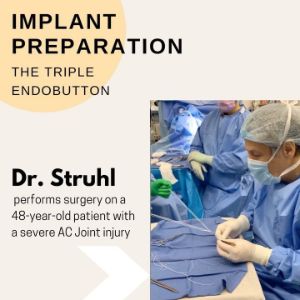
One of the most significant advancements in this field is the use of continuous loop fixation devices, which provide consistent tension without relying on knots.
Research-Backed Innovation
Steven Struhl is widely recognized for his expertise in AC joint separation and has contributed to advancing surgical techniques through clinical research.
Dr. Struhl was the lead author of an 11-year study published in The American Journal of Sports Medicine, which demonstrated that the continuous loop procedure offers superior outcomes compared to traditional methods.
Key findings from the study include:
- Excellent results maintained over long-term follow-up
- Improved joint stability
- Reduced risk of fixation failure
Importantly, the continuous loop device eliminates the possibility of knot slippage or breakage, two major causes of complications in older techniques.
Why This Matters for Patients
Choosing the right surgical technique can make a significant difference in your recovery and long-term results.
With advanced methods, patients can expect:
- More reliable joint stability
- Lower risk of complications
- Improved shoulder strength and function
- Reduced likelihood of needing additional surgery
For active individuals and athletes, this can mean a safer and more confident return to activity.
Expert Care in NYC and Westchester
Dr. Steven Struhl is a board-certified orthopedic surgeon with decades of experience treating complex shoulder injuries. His practice is focused on providing patient-centered care, combining advanced techniques with individualized treatment plans.
Patients benefit from:
- Expertise in cutting-edge surgical methods
- Personalized care throughout recovery
- Access to the latest research-backed treatments
Take the Next Step Toward Recovery
AC joint separation can significantly impact your daily life and physical activity. The good news is that with the right surgical approach, excellent outcomes are possible.
If you’ve been diagnosed with a shoulder separation or are considering surgery, contact Steven Struhl, MD in NYC or Westchester to learn more about advanced repair techniques and how they can help you regain strength, stability, and confidence in your shoulder.
Posted on behalf of Steven Struhl MD