Shoulder Arthritis
Arthritis in the shoulder is less familiar than arthritis in the knee or hip, and it is often further along by the time it is diagnosed for exactly that reason. Patients adapt without noticing. They stop reaching overhead, they switch which arm carries the groceries, and the grinding gets filed under normal aging until motion loss makes it impossible to ignore.
Shoulder arthritis is also the one condition where the right answer changes most over time, which is why continuity matters. Steven Struhl, MD has practiced in New York since 1991 and treats this condition across its full arc, from activity modification through joint replacement. He is board certified in orthopedic surgery and separately in sports medicine, is a Fellow of the American Academy of Orthopaedic Surgeons, and operates at NYU Langone Orthopedic Hospital, among the most established orthopedic specialty hospitals in the country. He sees patients with shoulder conditions in Manhattan and White Plains.
Types of Shoulder Arthritis
- Osteoarthritis: gradual wearing of the cartilage surface, the most common form after age fifty.
- Rheumatoid Arthritis: an inflammatory autoimmune condition attacking the joint lining directly.
- Post Traumatic Arthritis: cartilage damage developing years after a fracture or dislocation.
- Rotator Cuff Arthropathy: arthritis developing after a large, long standing rotator cuff tear.
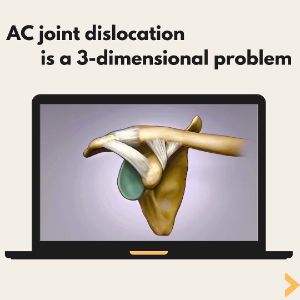
The acromioclavicular joint at the top of the shoulder can also become arthritic independently of the main ball and socket joint, and it produces a distinctly different pattern, with pain located precisely at the top of the shoulder and provoked by reaching across the body.
Shoulder Arthritis Symptoms
- Deep Aching Pain: discomfort felt within the joint, often worse with weather changes and at night.
- Grinding Or Catching: a mechanical sensation as roughened surfaces move against each other.
- Progressive Motion Loss: difficulty reaching overhead, behind the back, or across the body.
- Morning Stiffness: a period of stiffness on waking that eases somewhat with gentle movement.
Shoulder Arthritis Treatment Without Surgery
Arthritis cannot be reversed, but the road from first symptoms to joint replacement is long, and a great deal can be done inside it. Most patients manage the condition well for years before replacement enters the conversation.
- Activity Adjustment: modifying the specific loads and positions that provoke symptoms.
- Physical Therapy: maintaining motion and strengthening the muscles that support the joint.
- Injection Therapy: corticosteroid injections to reduce inflammation during symptomatic periods.
- Arthroscopic Debridement: smoothing damaged surfaces and removing loose fragments in selected cases.
Dr. Struhl is direct that an operation is not the automatic endpoint, noting that “not all cases require surgical intervention. It is our goal to establish tissue specific diagnosis early in the course of treatment, avoiding the weeks of therapy and repetitive injections that are typically given as initial treatment for orthopedic issues.” – Steven Struhl, MD, Board Certified Orthopedic Surgeon
Shoulder Replacement Surgery for Advanced Arthritis
- Total Shoulder Replacement: both the ball and the socket surfaces are replaced with implants.
- Reverse Shoulder Replacement: the ball and socket positions are switched to bypass a failed cuff.
- Partial Replacement: only the humeral head is replaced when the socket remains in good condition.
The reverse replacement solves a problem the standard version cannot. When the rotator cuff is irreparably torn, a conventional replacement has no working mechanism to lift the arm, because the cuff is what centers and elevates it. Reversing the geometry lets the deltoid take over that job instead, which is why cuff arthropathy is treated so differently from ordinary osteoarthritis.
Frequently Asked Questions About Shoulder Arthritis
- Lost cartilage does not regenerate, so the arthritis itself is permanent. What can change substantially is pain and function, and many patients manage symptoms effectively for years with therapy, activity modification, and periodic injections before any surgical option becomes necessary.
- Generally when pain is no longer controlled by conservative measures, when it interferes with sleep and daily activity, and when imaging confirms advanced cartilage loss. It is a quality of life decision rather than an emergency, and the timing is largely the patient’s to make with guidance.
- A standard total shoulder replaces the ball and socket in their normal positions and depends on a functioning rotator cuff to move the arm. A reverse replacement switches those positions so the deltoid can lift the arm, which makes it the option when the rotator cuff is irreparably torn.
- Modern shoulder replacements commonly function well beyond fifteen years, with longevity depending on age at surgery, activity level, bone quality, and implant type. Younger and more active patients place greater demand on the implant, which factors into the timing discussion.
- No. The acromioclavicular joint sits at the top of the shoulder where the collarbone meets the shoulder blade, and arthritis there produces pain localized precisely at that point, typically worse reaching across the body. It is often treatable with injection or a small arthroscopic procedure rather than replacement.
- Corticosteroid injections used judiciously are a standard part of arthritis management and provide meaningful relief for many patients. They are limited in frequency because repeated injections over time can affect surrounding tissue quality, which is why they are used deliberately rather than routinely.
Why Patients Choose Dr. Struhl for Shoulder Arthritis Care
- Full Treatment Arc: conservative management through replacement within one practice.
- Academy Fellowship: Fellow of the American Academy of Orthopaedic Surgeons.
- Hospital Standing: operating privileges at NYU Langone Orthopedic Hospital.
- In Practice Since 1991: more than three decades treating this condition as it evolves.
Schedule a Shoulder Arthritis Evaluation in New York City
Arthritis rarely requires an urgent decision, but it does reward an accurate picture early, since knowing how much cartilage remains changes what is worth trying and in what order. Dr. Struhl evaluates shoulder arthritis at his Manhattan and White Plains offices and will be direct about when replacement is worth considering and when it is not yet. Call the New York City office at (212) 207-1990 or the Westchester office at (914) 328-4111 to schedule an appointment.
Medically reviewed by Steven Struhl, MD on