Grading an AC joint separation is not a formality. It determines whether a patient is told to wear a sling for two weeks or offered reconstruction, and it is the single most consequential judgment made in the first visit after this injury.
It is also gotten wrong regularly, and for a specific reason. A standard shoulder X ray taken with the arm supported can allow a separated joint to sit closer to normal position than it actually does under load, which makes a grade 3 look like a grade 2. Steven Struhl, MD has performed more than 200 acromioclavicular reconstructions and published his long term outcomes in The American Journal of Sports Medicine, and accurate grading is where every one of those cases started. He is board certified in orthopedic surgery and separately in sports medicine.
The Rockwood Classification
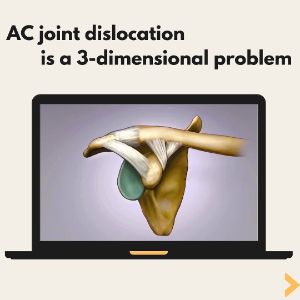
AC joint separations are graded one through six based on which ligaments have failed and how far the collarbone has displaced.
- Grade 1: the AC ligaments are stretched but not torn, with no displacement visible.
- Grade 2: the AC ligaments tear while the coracoclavicular ligaments remain intact.
- Grade 3: both ligament systems tear completely, producing the visible bump.
- Grade 4: the collarbone displaces backward into or through the trapezius muscle.
- Grade 5: severe upward displacement well beyond that of a grade 3 injury.
- Grade 6: the collarbone displaces downward beneath the coracoid, an extremely rare pattern.
Grades 1 and 2 are treated without surgery in nearly all cases. Grades 4, 5, and 6 essentially always require reconstruction. Grade 3 sits between them, and it is where the genuine decision lives.
How the Grade Is Actually Determined
- Physical Examination: assessing instability directly, in both the vertical and horizontal planes.
- Comparison Views: imaging both shoulders on one film to measure the difference between them.
- Weighted Or Stress Views: imaging under load, which can reveal displacement a resting film hides.
- Axillary Views: a specific angle required to identify posterior displacement in a grade 4.
- Advanced Imaging: CT or MRI when the pattern is unclear or associated injury is suspected.
The axillary view matters more than its obscurity suggests. Grade 4 injuries displace backward rather than upward, so a standard front to back film can look nearly normal while the collarbone sits behind the acromion. Without that view, a grade 4 is regularly recorded as a grade 2.
Dr. Struhl treats the grade as something to establish properly rather than approximately, noting that “by using high quality imaging modalities such as MRI early in the treatment process, we get to the heart of the problem quickly and precisely.” – Steven Struhl, MD, Board Certified Orthopedic and Sports Medicine Surgeon
Why an Accurate Grade Changes Everything
A misgraded injury sends a patient down a treatment path built for a different problem, and the cost is usually months.
- Undergrading: a grade 3 recorded as a grade 2 gets a sling and no follow up, and the bump stays.
- Missed Posterior Displacement: a grade 4 read as a grade 2 misses an injury that requires surgery.
- Delayed Reconstruction: a chronic repair is more involved than an acute one and heals more slowly.
- Lost Confidence: patients told to wait, who do not improve, frequently stop seeking care entirely.
Frequently Asked Questions About AC Separation Grades
- Grades 1 and 2 together account for the majority of these injuries, and both are typically treated without surgery. Grade 3 is the most common grade among patients who end up considering reconstruction.
- The ligament damage does not worsen on its own, but the recorded grade can change once better imaging is obtained. A patient told they had a grade 2 on a single standard film is sometimes found to have a grade 3 on comparison or stress views, which is a correction rather than a progression.
- Grades 4, 5, and 6 essentially always require reconstruction because of the degree and direction of displacement. Grades 1 and 2 essentially never do. Grade 3 is the genuine decision, and it depends on instability, symptoms, and the demands placed on the shoulder.
- Because the measurement that matters is the difference between the injured side and your own uninjured side, not a comparison to a textbook average. Normal coracoclavicular distance varies considerably between people, so your other shoulder is the most accurate reference available.
- An image taken while holding weight in the hand, which loads the joint and can reveal displacement that a resting film conceals. It is not always necessary, but it can settle the question when the examination suggests more instability than the standard film shows.
- Direction. A grade 5 displaces upward, more severely than a grade 3, and is usually obvious on a standard film. A grade 4 displaces backward into the trapezius, which a standard front to back view can miss entirely, and it requires an axillary view to identify.
H2: Schedule an AC Joint Evaluation in New York City
If you were graded from a single X ray taken with your arm supported, the grade is worth confirming, particularly if a bump is still visible or overhead strength has not returned. Dr. Struhl evaluates and grades AC joint injuries at his Manhattan and White Plains offices and reviews outside imaging for patients traveling from farther away. Contact us at (212) 207-1990 in New York City or (914) 328-4111 in Westchester.
How to accurately determine AC joint injury grade
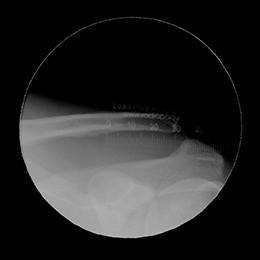
In order to determine the grade of injury it is essential that both the normal and the abnormal side be imaged. This involves both the standard “Zanca” view (for vertical movement) as well as an axillary view to determine horizontal movement. Accuracy is significantly improved when the measurements are done through digital analysis of the x-rays. Stress views are painful, and have not proven to be of additional value and neither necessary or recommended routinely.
Treatment significance
Currently with regard to the common subtypes of complete AC joint separation (grades 3, 4, and 5) there is no evidence that treatment outcome is affected by injury grade. It is commonly stated that a grade 4 or 5 shoulder separation should be treated surgically and a grade 3 shoulder separation should only be treated surgically in a young or athletically inclined patient. This approach while logical has never actually been validated in any mainstream clinical article to date.
Conclusion
While objective grading of an AC joint separation is important, current methods and grading systems are not well defined and not very accurate. It is extremely important to get x-rays of both the affected and normal side and when possible use digital measurements to determine severity. Grading is but one of many factors to be considered in clinical decision making, particularly the decision as to whether or not to recommend ac joint surgery.
Contact us today to schedule your consultation with Dr. Struhl.